
Parcel Shipping Surcharges: A Cost Review Guide
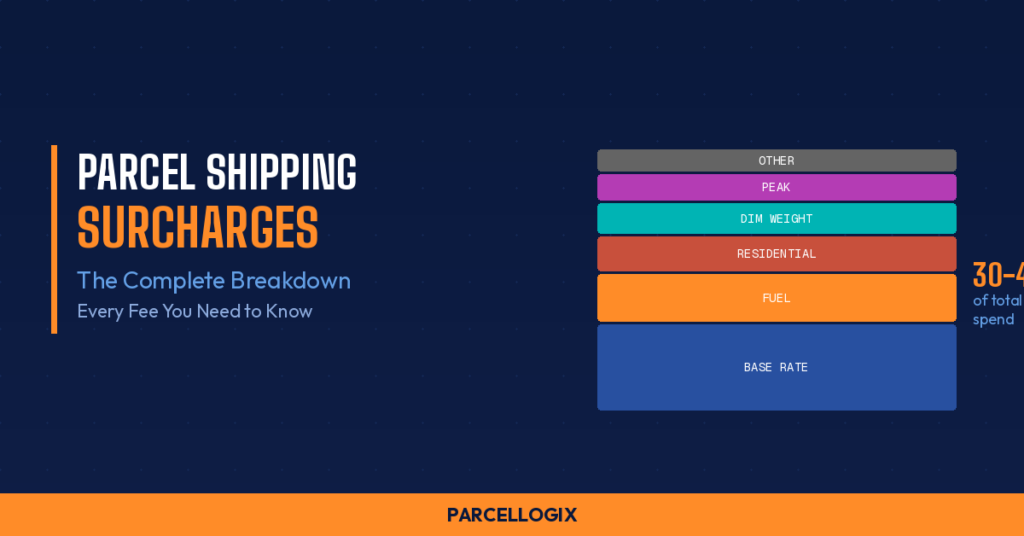
What are parcel shipping surcharges? They are charges added to transportation costs for specified services, destinations or package characteristics. Review fuel, residential delivery, delivery-area, handling and demand charges separately. The applicable amount depends on the carrier, service, shipment date and agreement.
Base-rate discounts do not describe your complete shipping cost. Start with actual invoice lines to see which fees matter most to your shipment profile, then distinguish pricing opportunities from billing errors and operational changes.
Which surcharge should you investigate first?
| Charge | Evidence to gather | Question to answer |
|---|---|---|
| Fuel | Effective table, percentage and charge basis | Was the correct calculation applied? |
| Residential delivery | Address classification, service and agreement | Does the classification and rate match the applicable terms? |
| Delivery-area or remote-area | Destination postal code and effective carrier list | Was this destination eligible for the billed category? |
| Additional handling or oversize | Dimensions, weight, packaging and carrier measurements | Which criterion triggered the fee? |
| Demand | Ship week, service, package profile and any volume inputs | Does the charge match the relevant schedule? |
| Address correction | Original label, correction record and invoice | Was the fee valid, and can the cause be prevented? |
Fuel surcharges
Use the table effective for the shipment and service. Check both the percentage and the charges included in its calculation. A correct percentage applied to an incorrect basis can still produce a billing difference. Consult the FedEx fuel tables and UPS fuel tables, together with your agreement.
Keep changes in published fuel rates separate from changes in shipment volume when explaining a budget variance. Document any contractual provision rather than assuming a cap or discount is standard.
Residential and delivery-area charges
Residential classification and geographic eligibility answer different questions. Check each fee independently, including whether both can apply to the shipment. A company name on an address does not by itself establish the billed classification.
Match destination postal codes to the carrier list effective on the shipment date. Rank eligible destinations by package count and billed dollars. If the fee is valid, the next decision is whether a written pricing concession or another eligible service improves total cost while meeting delivery requirements.
Additional handling and oversize charges
Identify the actual criterion in the applicable guide before changing packaging. Retain measured dimensions, actual weight and packaging details. Compare billed measurements with your records where a discrepancy appears.
Model the full effect of a packaging change: transportation, billed weight, handling eligibility, materials, labor and damage risk. A smaller carton is useful only when it safely fits the product and produces a better overall result. Do not assume a carrier will alter published thresholds; confirm any agreed exception in writing.
Peak and demand surcharges
Use current schedules for the specific shipping period. Different fees may have different effective dates, and some calculations depend on volume as well as service. Review the FedEx demand schedule and the documents linked from UPS rates and service guides.
Budget by shipping week and eligible package group. Confirm the rules for any volume-based charge separately. Alternative carriers can also assess demand fees; obtain their applicable terms before treating a carrier change as a saving.
Address corrections and other service fees
Compare correction charges with the original label and carrier records. Address validation can help identify data problems, but it does not guarantee deliverability or eliminate every correction. Also review signature services, Saturday services, returns and recurring pickup charges against what was requested and agreed.
Turn the analysis into an action list
- Rank the cost. Sum actual charges by category and count the affected packages.
- Validate the basis. Check a representative sample against current terms and shipment evidence.
- Separate the response. Route suspected errors to billing review, recurring data problems to operations and valid pricing exposure to contract review.
- Model net benefit. Include implementation costs, service effects and changes to incumbent incentives.
- Verify results. Compare subsequent invoices with the same shipment profile and document confirmed credits separately.
Common questions
Can every surcharge be negotiated away?
No. Availability and commercial value depend on the agreement and shipment profile. Evaluate the complete proposal, including any concession exchanged for a different rate or condition.
Are surcharge reductions the same as refunds?
No. A future reduction changes the cost of later shipments. A billing adjustment concerns an earlier charge. Track each separately and do not count a requested credit as received savings.
Continue with the parcel invoice audit checklist, savings measurement guide or contract negotiation process. ParcelLogix works with businesses spending $1 million or more annually on parcels. Request a free savings assessment to discuss your cost profile and engagement scope.