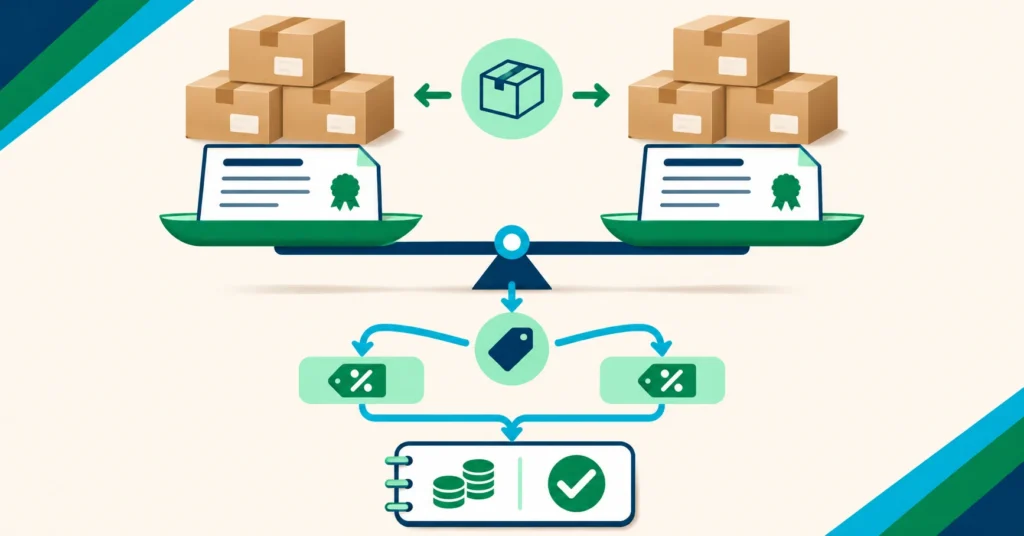
Compare carrier proposals on the same shipments, define a savings baseline and reconcile invoices to calculate gross savings and net benefit.

Practical parcel shipping guides for operations, procurement and finance teams. Compare carrier costs, review invoices, assess surcharges and measure contract changes using shipment-level examples.
Compare carrier proposals on the same shipments, define a savings baseline and reconcile invoices to calculate gross savings and net benefit.

Key answer: Small businesses can compare account pricing, consolidator options and regional carriers using their actual shipments. Package count alone does not establish a competitive rate. Include minimum charges, surcharges, pickup costs and delivery requirements in the comparison.

Key answer: Parcel surcharges are charges added to transportation costs for specified services or shipment characteristics. Review fuel, residential delivery, delivery-area, handling and demand charges separately. Use the schedule effective on the shipment date and your agreement to calculate the applicable amount.

Key answer: Dimensional weight measures package volume for pricing. Calculate length × width × height, divide by the applicable divisor, and apply the service’s rounding and billing rules. Compare the result with actual weight; a higher dimensional weight can increase billed weight without indicating an invoice error.
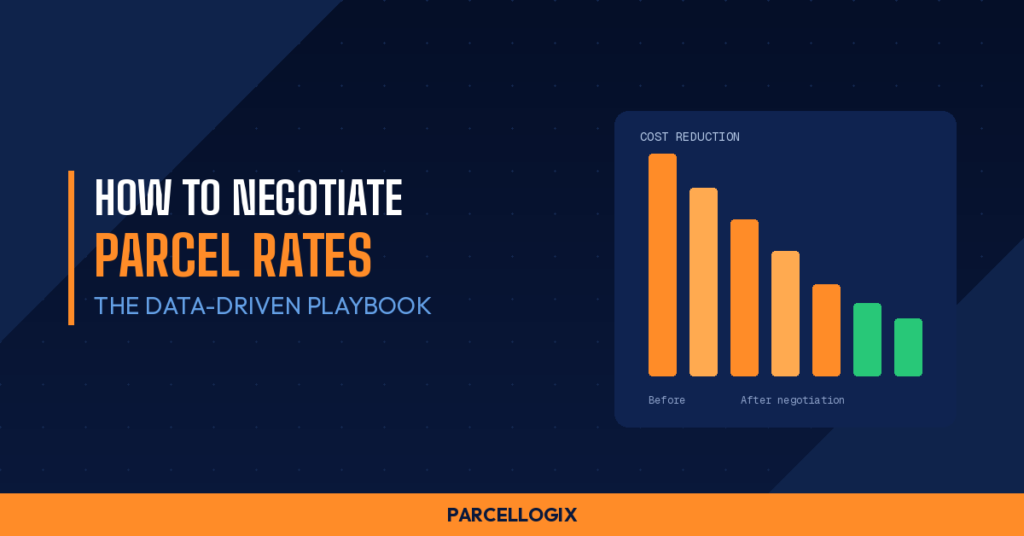
Key answer: Prepare for parcel rate negotiations by analyzing shipment history, identifying the largest cost drivers and comparing proposals on the same shipment sample. Evaluate minimums, surcharges and service requirements alongside discounts, then verify that the agreed terms appear on invoices.

Key answer: Effective parcel shipping management combines accurate shipment data, suitable packaging, service selection, carrier evaluation and invoice monitoring. Set delivery requirements first, measure total cost and service outcomes, then test changes before expanding them.
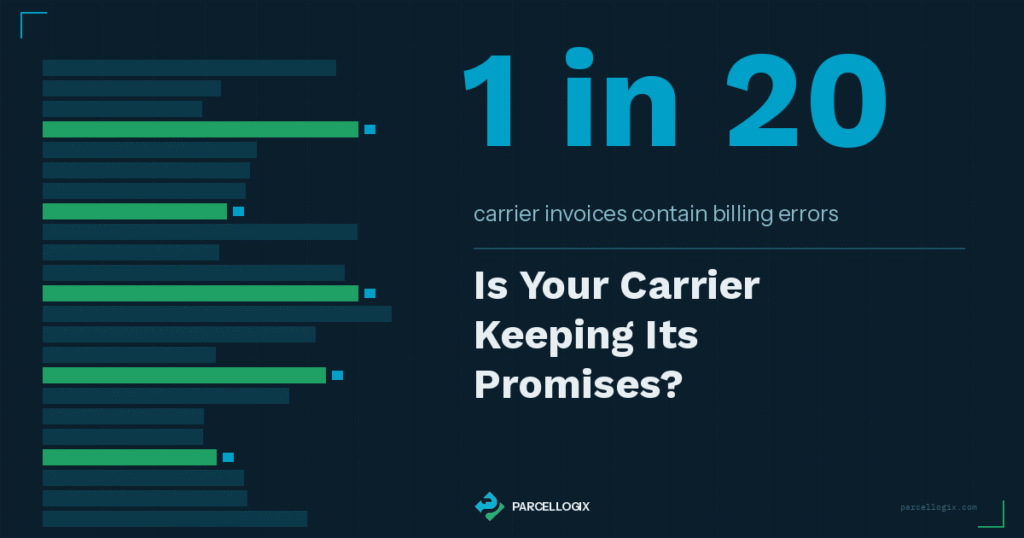
Key answer: Parcel contract compliance means checking billed charges against the agreement and applicable carrier rules. Verify account coverage, effective dates, discounts, minimums and surcharge provisions. Document discrepancies and confirm eligibility and deadlines before requesting an adjustment.

Key answer: Stable parcel volume does not mean stable shipping cost. Rates, fuel, destination mix, service selection, billed weight and surcharge exposure can change independently of package count. Compare these drivers separately to explain the change in cost per parcel.

Key answer: A parcel negotiation strategy should connect your delivery requirements with the terms that drive cost. Build a representative shipment file, compare feasible carrier options, prioritize material concessions and evaluate the full agreement before accepting a proposal.

Key answer: Start an avoidable-fee review with late payments, recurring pickup charges and address corrections. Confirm why each fee was billed, assign ownership of the underlying process, and measure the net benefit of any change. A valid recurring fee is not automatically an error.